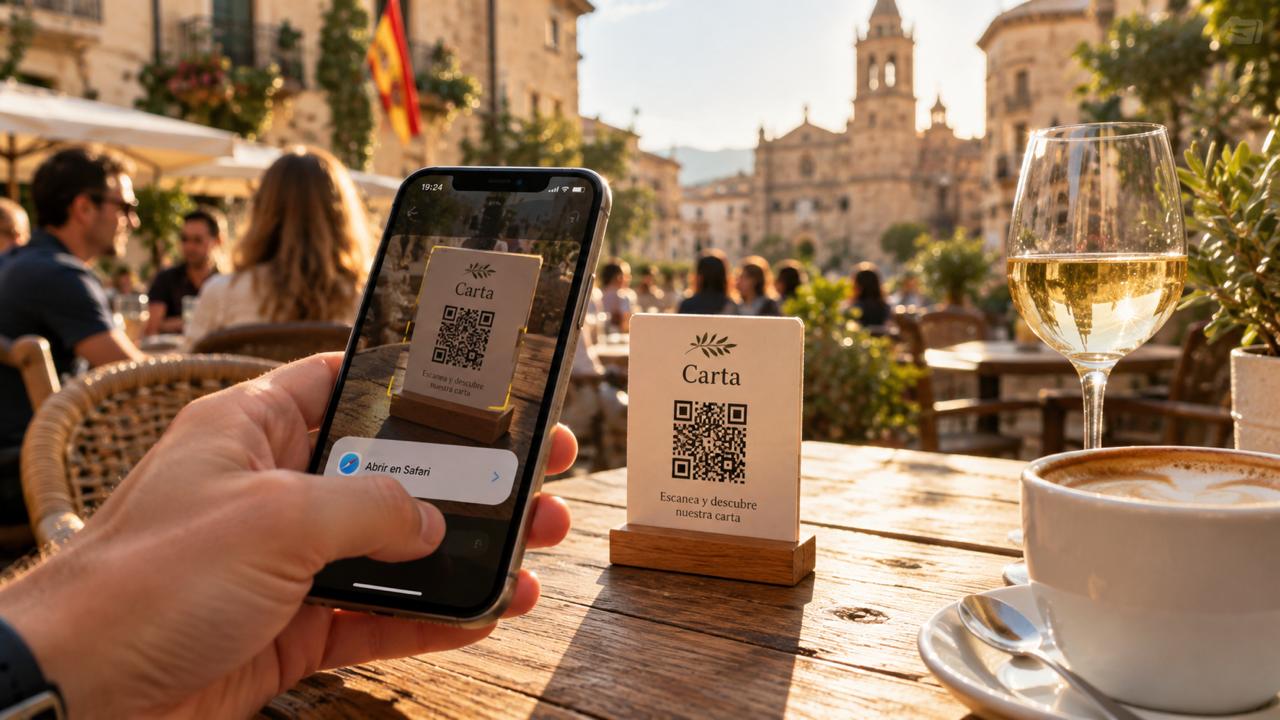
Tipping on card machines vs QR codes: what Europe is choosing
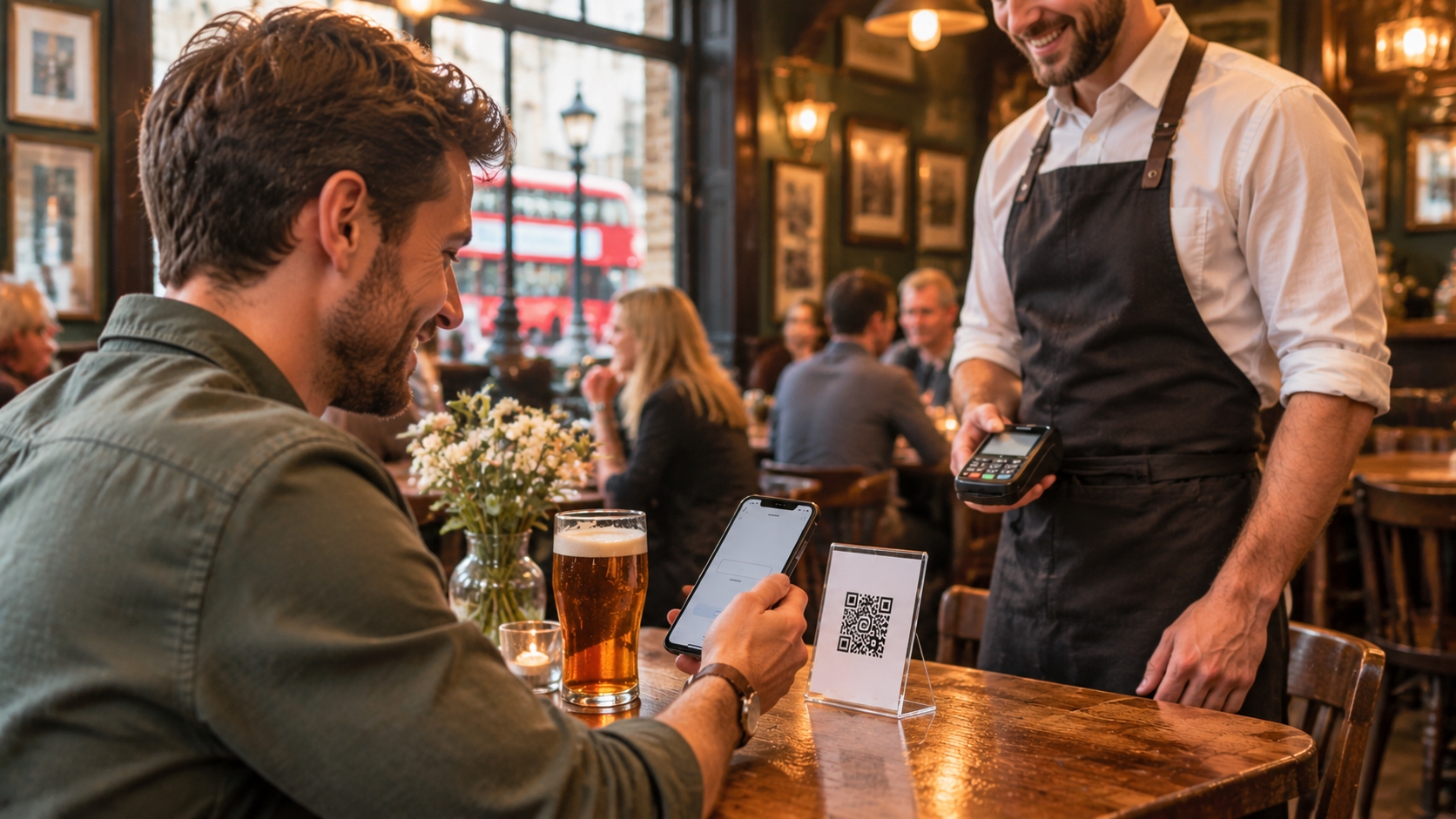
In a Berlin restaurant, almost one card payment in three comes with a tip. In a London one, barely three in a hundred. Tipping on card machines says less about how generous guests are and more about how the venue asks.
Why does card tipping vary so much across Europe?
Lightspeed analysed payments at around 9,000 restaurants in six European countries between June 2023 and August 2025. In Germany, more than 30% of card transactions included a tip, though the amounts were small, typically €3 to €4. In the UK the figure hovered around 3%. The study links this to the discretionary service charge already printed on many British bills. Most guests pay it without a second thought, so there is little left to add at the card machine.
Spain shows a different starting point. The European Central Bank’s SPACE 2024 survey, reported by the Banco de España, found that 57% of in-store purchases there are still paid in cash, against a euro area average of 52%. Leaving a few coins on the bar is still the Spanish habit, but fewer guests carry coins each year.
Card machine tip prompts: more tips, more complaints
The Netherlands shows what happens once the terminal asks. Payment-provider figures published by the Dutch public broadcaster NOS in 2026 show that almost nobody adds a card tip unprompted. With a tipping menu switched on, 39% of guests leave one, averaging €4.31.
The cost is goodwill. In January 2026, Ireland’s consumer watchdog, the CCPC, reported that one in four people who had come across a standalone tipping terminal had tapped it by mistake. Asked about screen design, 49% preferred a simple yes/no question, while only 28% wanted preset amounts. Spanish diners react in much the same way, as we covered in The customer pays by card and the tip disappears.
Do card tips go to staff in the UK?
They must. The Employment (Allocation of Tips) Act has applied since 1 October 2024. Tips the employer receives or controls must reach workers in full, with no deduction for card processing fees or admin costs. They have to be allocated fairly under a statutory code of practice and paid by the end of the following month.
So every pound tapped on the card machine is business money until it is shared out. It has to be recorded, the card fee absorbed, and the total run through payroll or a tronc, a pooled fund run by an independent operator. For a Manchester pub with twenty staff, that is a monthly admin job.
Card machine or QR code tipping?
No official body yet publishes how many tips are left by QR code, so any comparison of market share would be guesswork. What can be compared is how each system works:
| Card machine | QR code | |
|---|---|---|
| When the guest tips | Only when settling the bill | Whenever they like, including after paying |
| Where the money goes | Into the business account, then shared | Depending on the service, straight to the worker |
| Who can be tipped | Whoever takes payment, usually front of house | Anyone with their own code: housekeeping, kitchen, reception |
| Card fee | Borne by the business | Depends on the provider |
| Pressure | Screen held out by the server | Guest decides on their own phone |
The row that matters most is the last one. When the card machine asks for a tip along with the bill, the guest decides with the server standing there and the terminal in their hand. Few people complain out loud. Plenty simply press “no tip” and leave feeling slightly cornered. The CCPC research reflects this: two-thirds of Irish consumers feel tipping is becoming less voluntary, and three in four want it to be easier to opt out. A QR code removes that awkward moment. Nobody asks. The guest decides whether to tip, how much and who to thank, in their own time and on their own phone.
What suits which venue?
In a busy London café with £4 flat whites, a yes/no prompt on the card machine may be enough, as long as “no” is just as easy to press. In a sit-down restaurant in Edinburgh, card tips work well but end up in the tronc, and guests rarely know who receives them.
Hotels are different. Housekeeping staff are never at the card machine, and guests check out without meeting them. A QR code for digital tips left in the room lets guests thank the right person from their phone, whenever suits them. How these choices shape staff motivation is something we compared in Tipping in Spain and the UK: two approaches.
In short
Card machine prompts raise the number of tips, but they ask at the worst possible moment: alongside the bill, in front of the server. A guest who doesn’t want to feel pressured often ends up leaving nothing. QR tipping doesn’t replace the card machine, it complements it. The decision stays with the guest, and the same code works for thanking the whole team or one person, including staff who never handle payment.
Sources
- Over 30% of card transactions with a tip in Germany, around 3% in the UK (restaurants, Jun 2023 – Aug 2025): Lightspeed digital tipping study, via TendanceHotellerie. https://www.tendancehotellerie.fr/articles-breves/communique-de-presse/25070-article/etude-lightspeed-pourboire-digital-frequence-et-montant-a-la-hausse-en-france
- 57% of in-store payments in cash in Spain (SPACE 2024): Banco de España, via Europa Press / Bolsamanía. https://www.bolsamania.com/noticias/mercados/economia--los-pagos-con-tarjeta-y-movil-en-comercios-fisicos-ganan-terreno-al-uso-del-efectivo-segun-banco-de-espana--19337931.html
- 52% of point-of-sale payments in cash across the euro area: ECB, SPACE 2024 press release. https://www.ecb.europa.eu/press/pr/date/2024/html/ecb.pr241219~172b929461.en.html
- 39% tip when the card terminal asks, average €4.31 (Netherlands): NOS. https://nos.nl/l/2623445
- One in four tapped a tipping terminal by mistake; 49% prefer yes/no screens vs 28% preset amounts; two-thirds feel tipping is becoming less voluntary, three in four want an easier opt-out: CCPC tipping report, January 2026. https://www.ccpc.ie/business/research/market-research/ccpc-tipping-report/
- Tips law in force from 1 October 2024 and statutory code of practice: GOV.UK. https://www.gov.uk/government/publications/distributing-tips-fairly-statutory-code-of-practice
- No deductions for card fees, payment deadline: Employment (Allocation of Tips) Act 2023, legislation.gov.uk. https://www.legislation.gov.uk/ukpga/2023/13