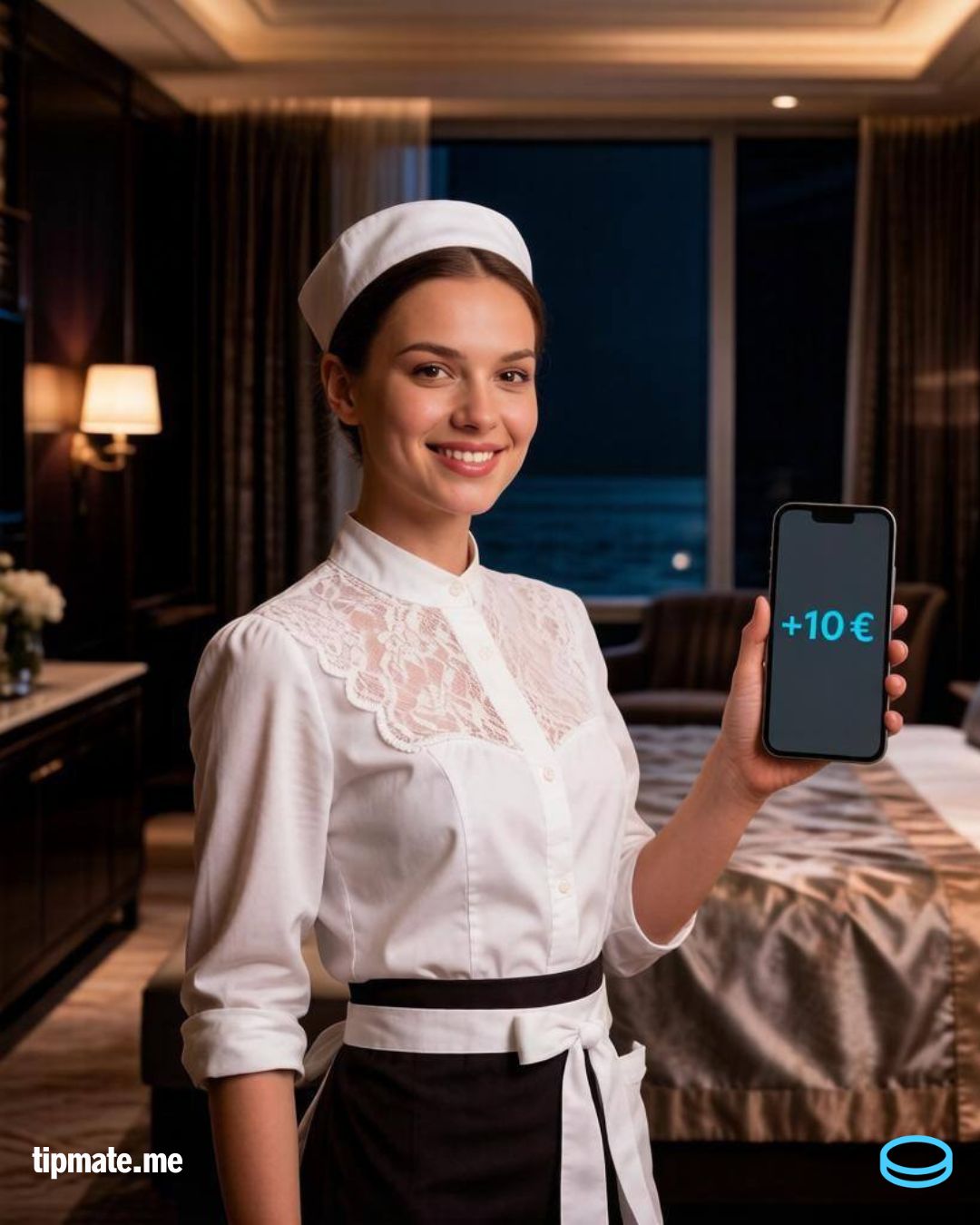
The customer pays by card and the tip disappears: how Spain's hotels are looking for a way out
Last day of the holiday. The waiter at the hotel restaurant recommended the dish of the day and greeted you with a smile every morning. You pay by phone, want to leave him something and realise you haven't got a single loose euro.
It is not unusual. Spain welcomed 58.1 million tourists up to July 2026, 4.6% more than a year earlier, according to the INE. And although cash is still the main way of paying in shops (57%, according to the Bank of Spain), its use keeps falling while mobile payments grow.
Spaniards don't want tipping "the American way"
Many venues have answered with a card terminal that suggests percentages. Customers aren't convinced. In TheFork Lab's survey on tipping in restaurants (more than 4,500 users, published in September 2026), 77% would abolish tips and 60% think it is wrong for the venue to suggest the amount.
Yet the same study says 26% always tip and 58% tip according to the service: 84% still say thank you. What bothers people is a screen deciding for them. It isn't popular in the United States either: according to Bankrate, 38% are irritated by preset amounts and 27% tip less when they see them.
Is tipping compulsory?
No. Tipping is voluntary and any extra charge requires the customer's express consent, so you can decline it on the terminal. If you do leave one, it is taxed as employment income (IRPF) and the employer cannot keep a share.
Who feels it most
Vanishing cash is felt most by the people who deal with guests every day. A report in El Español (17 September) says a 64-year-old hotel cleaner is paid €1.50 per room, the same as ten years ago. It doesn't mention tips, but it gives an idea of what each euro means for these teams. We looked at why housekeeping staff leave in our article on housekeeping turnover.
A tip that reaches the person who earned it
Between the shared jar and the terminal with preset percentages there is a third way: a tip the customer chooses that goes straight to the person who served them. For it to work it has to be voluntary, transparent and secure, with the QR code on the hotel's official materials, because fake codes exist.
The short version
A tip shouldn't be an obligation or a percentage imposed by a screen. Spaniards don't object to saying thank you; they object to being made to. A tip the customer chooses and that reaches the person who earned it is the one that best fits what they are asking for.